A Creative Journey for Social Change
“What happens when young people feel a sense of control and imagination over their own lives?” - That’s the core question underpinning the latest reflection written by Dr Meg Peterson.
A scholar, artist and cultural leader, Dr Meg Peterson is the Founder of 21 Artists and Senior Lecturer in Creativity & Entrepreneurship at King’s College London. From the power of collective learning to the importance of an asset-based approach, her insights offer a fresh perspective on what it really means to harness creativity for social change. Read on to see her key learnings after a decade working with The Agency:
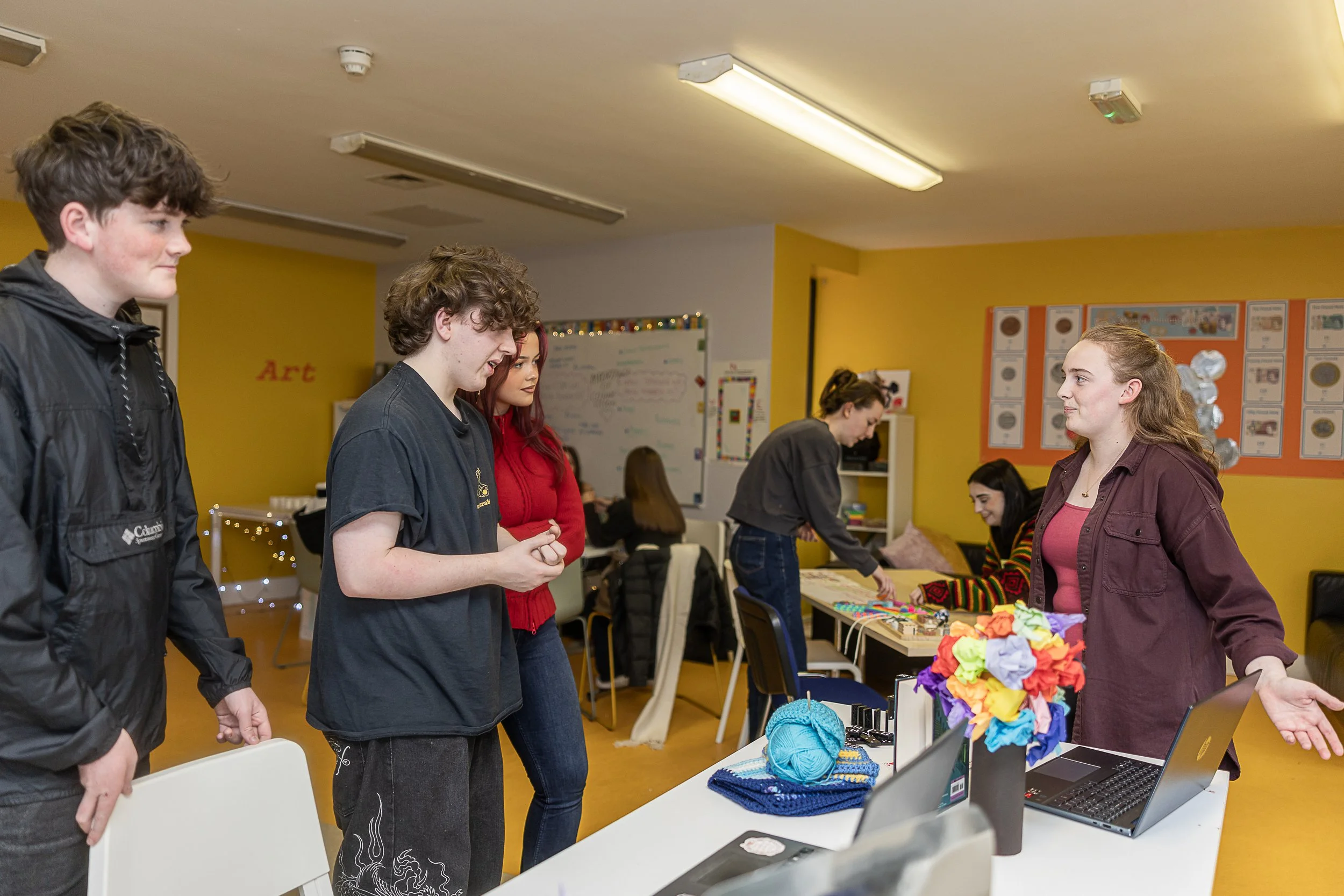
Agents sharing their project ideas to other young people in the community at Festivals of Ideas, as part of community consultation.
When young people feel they have control over and a sense of imagination towards their lives, amazing things happen. I have seen this in my years teaching art to young people aged 5-19 across the city of Chicago. I have seen it working in schools in Accra and the countryside of Italy but have not seen this as powerfully as I have with The Agency programme. I was first introduced to The Agency in 2015 when I began working at Battersea Arts Centre while doing my PhD. I was brought on to work with universities, however a few months after I started, The Agency team received some seed funding to be able to develop a more robust social impact evaluation framework which included a foreign concept to me at the time- a Theory of Change. I had no idea at the time what a profound impact it would have on my life and my practice. In that moment, I became an evaluator focused on social impact, something that I still spend a lot of time doing today. More importantly, I still have a great deal of curiosity and interest in this space of social impact, shaped initially by my work on The Agency.
The Agency is a social enterprise development programme that uses a creative methodology to teach about entrepreneurship. The methodology is creative, but the projects don’t necessarily have to fall within the creative industries but are all rooted in social change, opening up the possibilities for applying creativity in many contexts outside of the arts. Fast forward ten years, I was the evaluator for nine years and was able to travel to Brazil to see The Agency first-hand. In that time, I have seen and documented transformative impact in hundreds of young people who have come through the programme in 8 locations around the UK.
Since moving on from Battersea Arts Centre, I am now working as a Senior Lecturer, Creativity and Entrepreneurship at King’s College London, teaching entrepreneurship and using creativity and social change as key pillars of the curriculum. Thinking back, I am not sure I would be where I am today without being so involved in The Agency over the years, realising now what a profound impact it has had on how I teach, my perspective on the power of creativity and even how I move in the world, particularly in the areas of creativity, social change and education.
Reflecting back, there are some key lessons that I gathered on my journey working on the programme that I want to share. These six points are as follows:
1. Everyone is creative
This might sound obvious, but I truly believe and have seen that everyone is creative and has the capacity to use their creativity for good. In line with theories of everyday creativity, in The Agency, creativity is a method and a mechanism rather than a final product. Ideas in The Agency can be related to the creative industries or not, but creativity is an essential part of the process regardless. Depending on our backgrounds and life situations, we may be more limited than others in how we are able to exercise our creativity, but regardless, creativity is within us all. There is no one-size fits all for creativity- while everyone is creative, everyone’s creative process is different. Part of recognising we are all creative in an educational context is also allowing ourselves and young people especially to explore that creativity to find out what works for them, giving them tools to navigate that exploration.
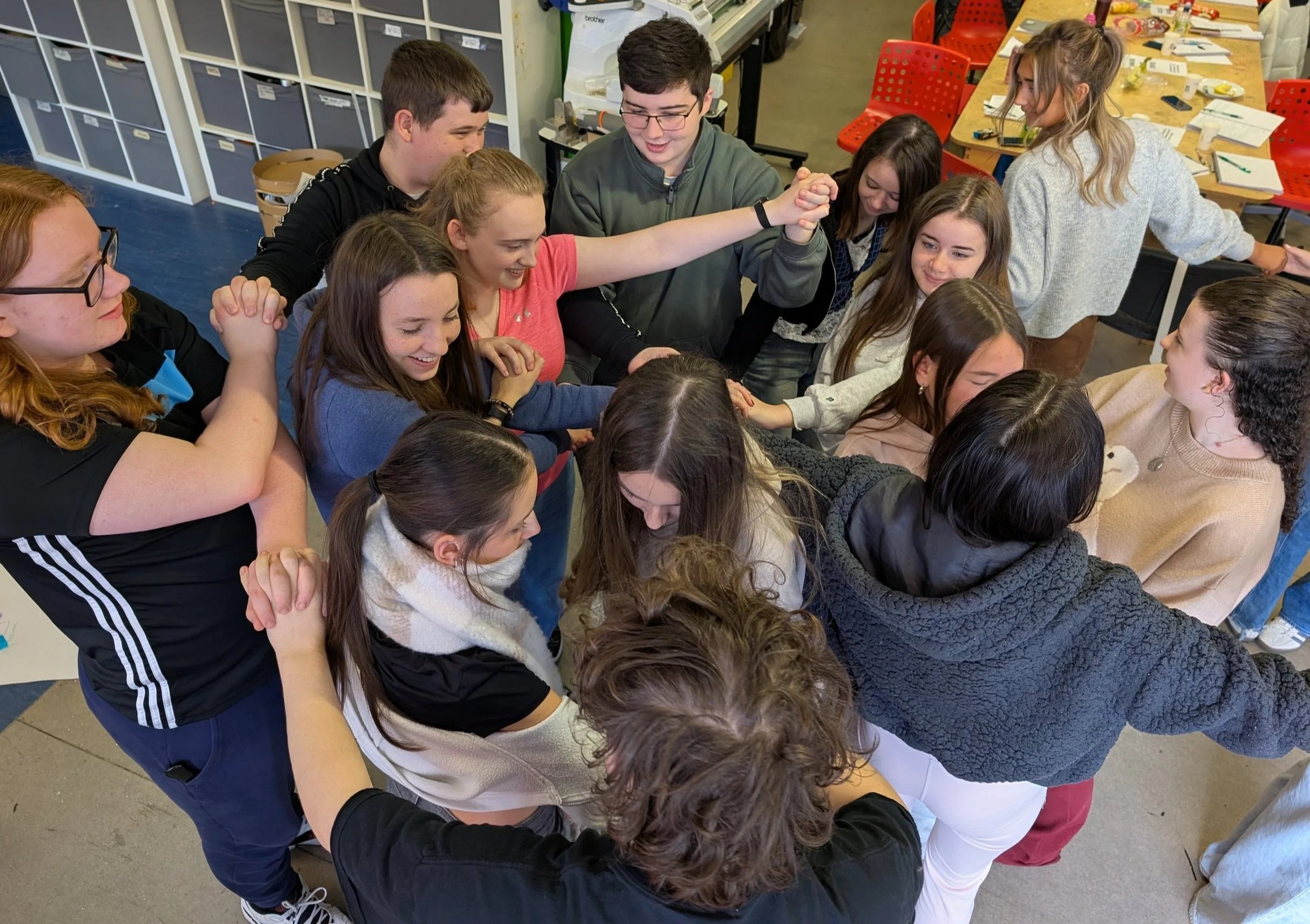
Agents participating in a creative activity during Cycle 1 of The Agency programme.
2. Entrepreneurship is just another creative process
In line with the first point, developing entrepreneurial ideas is a creative process. The process of young people developing their entrepreneurial ideas is creative, full of dynamic activities to build and activate this perspective in young people. I have seen this now first-hand time and time again in the university classroom teaching entrepreneurship as well as in The Agency. It is nearly impossible for young people or anyone really to develop entrepreneurial ideas without creativity, being free to generate ideas and build them in a supportive environment that nurtures their creative selves is essential.
3. Testing entrepreneurial ideas is crucial to success
It can be a challenging mindset to adopt, but anyone serious about developing an entrepreneurial idea must be able to adopt a more playful mindset that allows for experimentation and some detachment from the results of the entrepreneurial testing process. This is not a new concept- prototyping and testing of ideas has been around for a long time, but I have been surprised how many entrepreneurs and start-ups don’t follow this methodology, investing too much time, energy and resources into an idea before it has been tested or has any sort of proof of concept. It’s understandable that we get excited and sometimes impatient with wanting to start our ideas right away, but the more testing that can be done up front, the more sustainable the idea. In The Agency, young people have to get the approval of their communities to support the development of their idea. They also have community consultations that allows for an early sounding board for their idea. The funding they receive if their projects make it through the panel and are awarded the £2000 is meant to be a testing ground to propel them into further opportunities or more funding to grow their idea. This helps young people to see if their ideas are viable and supports them to pivot or change things later on down the line.
4. The sum of the parts is greater than the individual in a productive learning environment
The role of education is to facilitate collective learning rather than disseminate knowledge. It’s important that the perspective is to learn and be porous with other students rather than seeing them as competition or a barrier to success in some way. This aligns with social creativity, unlocking the potential for a group of people to be creative together, seeing this as a benefit and bonus to the learning process. This takes some cultivation to achieve- a building of trust and connection but also valuing the contribution of each member of that learning community equally. While it is easy for educators to fall into the trap of being seen as ‘the expert’, similar to that of the artist or creative, a dismantling of this ideal will help make a better learning community for all. In The Agency, young people support one another to build and develop their ideas. More importantly, young people are seen as essential pieces to the puzzle of community development, not a hindrance to it. So, seeing young people as people ripe with potential and ideas, no matter their circumstances, helps to build this collective community of trust connection and shared learning.
5. The best ideas come from using the resources already available while clearly understanding the problem
While it is tempting for communities deemed to be ‘deprived’ to see themselves from the perspective of lack and in desperate need of resource, a key perspective change comes with starting with the resources already available than from a place of lack. These resources could be skills, experience, physical places in communities, local knowledge, etc. but having this mindset will allow a fertile creative ground for new ideas to flourish. In The Agency, they use this asset-based approach rather than that of deficit, which is a helpful starting point for young people to develop ideas that are sustainable because they have a personal connection to it and that are needed because it comes from something they have identified on their own. When I teach entrepreneurship now, I encourage my students to also start from this place rather than with ideas they have little connection to or experience in. This is supported by an early focus on identity - who are they? Where do they come from? What are the issues there? What do they care about? Helping them to understand themselves better is a step in the right direction to create a successful, sustainable idea.
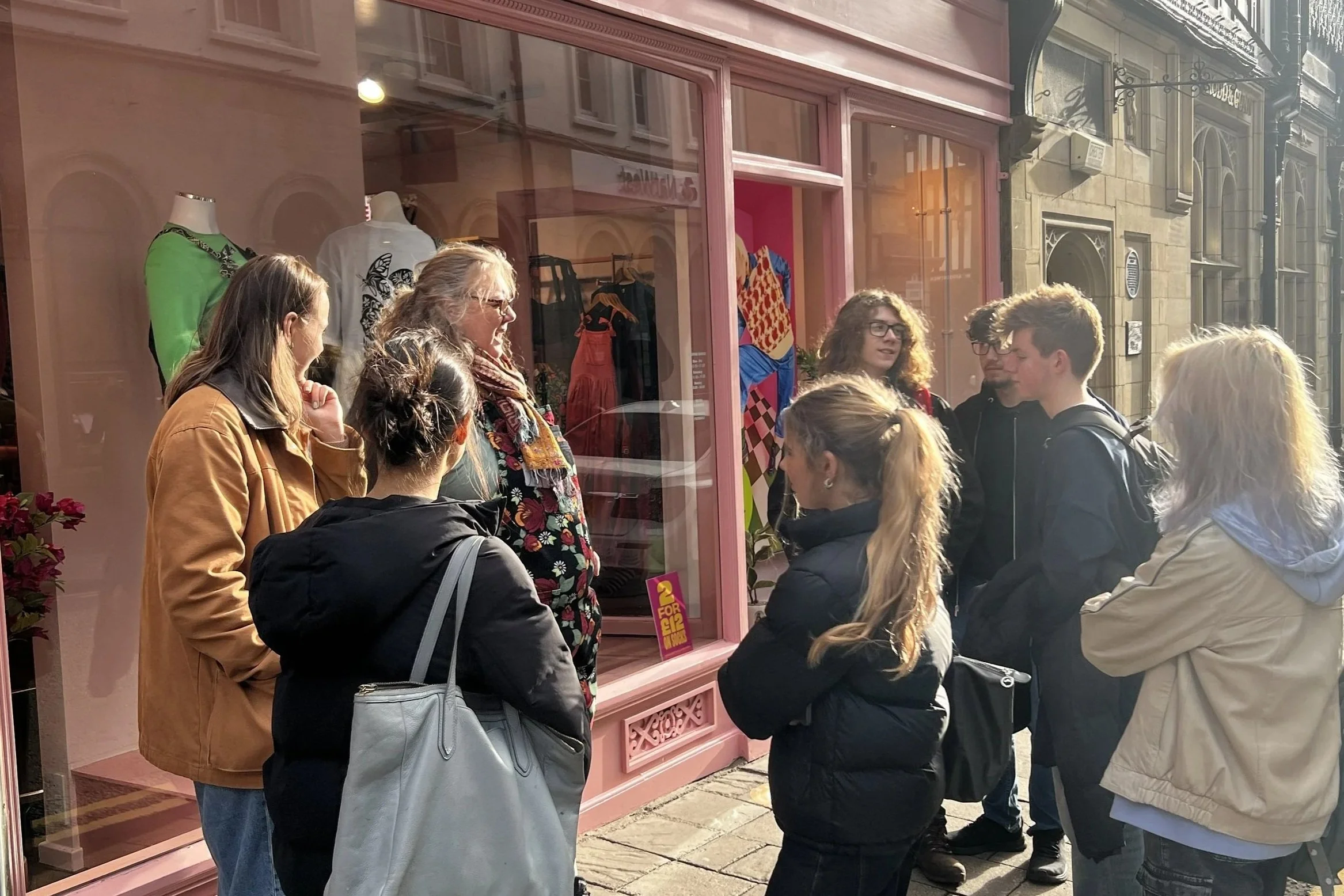
To learn about marketing and branding, Agents went on a tour led by a local fashion brand.
6. Learning should be fun
Once again, seems like an obvious point, however, past a certain age, especially at university level, it is assumed that learning should be serious. Learning should require a certain level of focus, discipline and importance that doesn’t allow space for joy or enjoying the learning process. In school, whether we like it or not, we have to take certain subjects, are required to do our best in most circumstances to get a good grade. However, outside of school and future work, learning is optional and requires the drive of the individual to continue with an appetite for learning and building our knowledge base in new areas. So, it is the job of the educator not only to teach the subject at hand but also to create a culture of curiosity in the classroom, a culture of wanting to learn and to enjoy doing it. I have seen this in The Agency as the programme is educational though wildly different from the young people’s experience of being at school which is often very rigid and formal. Many of the young people do not have a very positive experience of being at school. I have seen this in my own teaching both of school aged children as well as at university- learning needs to be humorous, light, playful and open to create an environment where students of all ages have a desire to learn and grow.
These points, ten years on from when I began working on The Agency, are where I am now. These are the areas that I highlight, but this is not the end of the story. The way that impact works is that this is compounded and built upon over time. Sometimes we don’t even realise how something has shaped us until years after it has finished. So, I share these points as reflections but not as finished points, not as a period or full stop, a line in the sand. These are areas of continuous growth, reflection and commitment to robust, creative and inclusive education for all. I’d love to continue the conversation and hear more about what others are doing in this space. If you are working in this area or want to learn more, we’d love to hear more about what you do.

About Dr Meg Peterson
Dr Meg Peterson is a scholar, artist, cultural leader, educator, and activist whose work has taken her around the globe to use art and creativity as a means of connecting people and communities. She is the Founder of 21 Artists, a creative consultancy focused on fostering, documenting, and evaluating creative social change through projects and programmes with universities, NGOs, charities, artists, and community groups. Projects utilise inclusive, feminist, democratic and participatory methodologies to develop research and evaluation frameworks with UK-based organisations as well as collaborations with organisations in the US, Brazil, Ghana, Greece, Somalia, Italy, Chile, Uganda, Morocco, and Palestine. Meg is also a Senior Lecturer in Creativity & Entrepreneurship and Pro-Vice Dean (Postgraduate Education) at King’s College London, pioneering research and teaching focusing on cultural entrepreneurship, cultural policy, creativity, and creative social change.